
Baby not on board with your old hatchback?
A new family can come with new surprises. But that shouldn’t mean you have ...

Scammers are becoming more sophisticated and some are even trying to impersonate
ING. But unlike us, they don’t have your best interests at heart. So, beware of imposters. Here’s what to watch out for and how to help keep yourself scam safe.
An impersonation scam is when a scammer poses as a trusted individual or organisation – like ING – to trick you into handing over your details or money.
Sometimes they’ll say a transaction or your account has been blocked and you need to provide your info or click a link to fix it. Scammers may even ask you transfer money – DON’T!
One morning ING customer Sue* received an SMS that looked like it came from ING.
It said her account had been suspended and she needed to follow the prompts by clicking a link in the message.
Luckily, Sue noticed the SMS came from an unknown number and didn’t include the usual ING contact details.
Instead, she used her ING app to check her Orange Everyday was still active.
She then called ING to report the scam.
* Name changed for privacy.
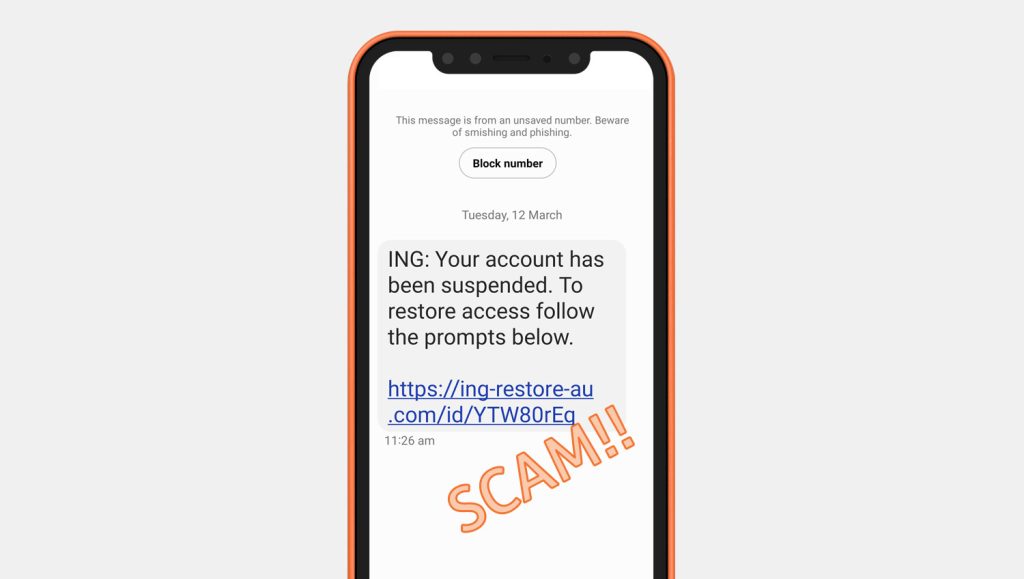
Every crime has its modus operandi, so here are some clues to look out for:
To help avoid an ING impersonation scam you should:
Whatever the type of scam, keeping these simple steps top of mind could help prevent you from becoming a scam statistic.
For our latest security alerts and more ways ING can help to protect you and your money, visit ing.com.au/security.
The information is current as at publication.
A new family can come with new surprises. But that shouldn’t mean you have ...

3 handy hacks to max your tax return – legally For many people, EOFY ...

From rainforests to sprawling coastlines – we might be a little biased, but we ...

If you have a personal loan, the faster you pay it down, the less ...

8 handy hacks for organising your home for the new year Why wait for ...

What’s that you say? I can make money playing with puppies?! Indeed, you can. ...