
Getting ready to bid.
Auction time is a whirlwind, but preparation pays. Here are four steps you can ...

Decided it’s time to find a bigger place, a more convenient location or a larger backyard? Maybe you’re an empty nester looking to downsize, or make that long thought about sea or tree change? For the many Australians these can be very enticing thoughts.
But, before you start searching for properties, it pays to do some research. Because you may find buying the second time around quite different to the first. For starters, there are two homes involved and usually both a buying and selling process to negotiate. And if you buy first, before you sell your current home, the finance can be more involved.
To help you plan your strategy and explain your options, here’s a step-by-step guide to the process, to get you on the road to your next home.
Buying your next home is a major life decision. So the first thing you need to ask yourself is why do you want to move and what are you looking for in a new home.
Take a moment to list what your main priorities are for a new home, for example more space, closer to the beach or quicker work commute. This allows you to start doing your real estate research – to see, for example, how much the property you’re looking for is likely to cost, in the area you want to move to.
Once you’ve figured out what you’re after, you might come to the conclusion that you’re basically happy where you are, and would be better off renovating your home to make the changes you need. Or, it may help make it even clearer that it’s time to move.
If your current home has increased in value over the years or you’ve made extra mortgage repayments, you may hold significant equity in your current home.
You may be able to use this equity in the process of purchasing your next home, for example as security for your next loan, or to help with your deposit.
To get an idea of the equity you hold, you’ll need to get an estimated market value of your current home. Your equity will be the difference between your home’s market value and the amount you still owe on your home loan.
However, in most cases, you won’t be able to borrow that entire amount. To get an idea of how much equity you might be able to use towards your next home, just jump onto our equity calculator.
Now that you have a rough idea of what the home you’re looking for will cost, and the equity you have available, you need to get an understanding of how much you can afford to borrow and repay.
Another consideration here is your income. As a rough guide, it’s suggested that repayments on your new home don’t exceed 30% of your after-tax salary. It’s also worth noting that it’s generally recommended that your home costs no more than 3 to 5 times your household income.
Our borrowing power calculator can help you figure out how much you could borrow, while our repayment calculator can show you what you would need to budget for each month based on the amount you want to borrow. But again, chatting with your lender, or one of ING’s home loan specialists, can help you to begin to assess your situation in full.
Now you know your budget, next comes the age-old upgraders’ question. Is it better to sell or buy first?
Selling your current home first is generally considered the safer option, while buying first may give you more opportunity to find your ideal next home. But there are pros and cons to both. And the current state of the housing market is also a big consideration.
To discover both sides of the story, read our article To buy or sell first, that is the question?
Alright you’re getting serious now. Even if you’re in the ‘sell first’ camp, you need to start thinking about getting your finances in place to buy – as you may want the gap between the two settlement dates to be as close as possible.
Getting a home loan pre-approval from a lender is a great way to get the confidence to start your property search. Pre-approval is an indication of your ability to borrow funds from a lender (based on the information you’ve provided them) It will allow you to shows real estate agents and buyers that you’re in the game and are more likely to afford the property. It allows you to bid at auction and gives you an idea of what price range to keep your property search within.
If you’re buying first, it’s a bit different. You will need to think about how you’re going to pay your deposit and potentially organise bridging finance with a lender, so you can juggle two loans at once.
You’ve got your pre-approval sorted, now the search begins. You’ve got a good idea of what your budget is and what you’re looking for, which helps narrow the field. Now it’s just a matter of finding the home that’s right for you.
You may have to attend quite a few open homes and it can be hard to remember which home is which. So a good tip is to keep a little checklist of the things you like and dislike with each home and take lots of photos to help trigger your memory.
At the same time, you may be getting your current home ready to sell, depending on your strategy. If that’s you, then take a look at our article ‘How to help buyers see what you love about your home, for some great tips on helping prospective buyers fall in love with your home, just like you did.
If you’re selling and buying at the same time, it can be quite stressful. So it’s important to do as much as you can to get your finances sorted and do your research upfront so you’re ready to go when you find your dream home.
You’ve found a home you like. It ticks all your boxes, or most of them, and it’s in your price range. If you’re confident that this is the home you want and can afford, and all the inspections check out it’s time to make an offer. Once you’ve agreed on a price with the seller, link in your lender to ensure all the finance is assessed and approved so that you can get ready for settlement.
If you have yet to sell or rent out your home, time to get that in full swing to minimise financial losses and get ready to move into your new home!
Our ING home loan specialists are here to help. No matter where you are in the process, whether you’re trying to calculate your equity or obtain pre-approval, they can chat you through all your options and give you a clearer picture of your next steps.

To talk to an ING home loan specialist, simply call 1800 267 809, 8am – 6pm (AEST/AEDT), Monday to Friday or 9am – 5pm on Saturday.
In relation to our credit products, you should consider our Terms and Conditions booklet, Fees and Limits Schedule, Credit Guide and Key Facts Sheet available at ing.com.au when deciding whether to acquire, or to continue to hold, a credit product.
Any advice on this website does not take into account your objectives, financial situation or needs and you should consider whether it is appropriate for you. Before making any decision in relation to any of our products you should read the relevant Terms and Conditions booklet and Fees and Limits Schedule available under our Documents & Forms page. To view these documents you may need Adobe Acrobat. Eligibility and credit criteria apply. Products are issued by ING, a business name of ING Bank (Australia) Limited ABN 24 000 893 292, AFSL and Australian Credit Licence 229823.
Auction time is a whirlwind, but preparation pays. Here are four steps you can ...

It’s the question hanging over the heads of most first home buyers. And the ...

So you’ve done your research and a fixer-upper feels like the right first home ...
5 min read
From befriending a real estate agent (seriously!) to frank chats with friends – building ...
4 min read
Home truth: life as you know it doesn’t need to stop when you start ...
6 min read
Trying to get a foothold on the property ladder? Here are a few tips ...

So, you’re putting in the hard yards to save for your first house. Once you’ve got it, you’ll be able to get flexy with your financials, right? Not soooo fast. A new house can mean a new lifestyle, and it might call for a new money mindset, too. Things can change, but how much things will change is a little unknown. One thing that’s almost certain: you’ll be moving from saving for one big thing (your home deposit) to regularly paying for your home loan. We interviewed a first home buyer who has been there and done that. Here, Sophie tells us how her life changed when she moved in and how, in small but important ways, her budget changed with it to keep her doing what she loves.
We bought a two-bedroom apartment. It’s north facing and drenched in sunlight, and it has a beautiful wraparound balcony. For me, my number one priority was for it to be north facing, for the natural light. For my husband, Tim, he wanted a decent balcony. Lucky for us, we were both able to get the things we wanted.
I was really fortunate to go on this journey with Tim. It was great to have someone else to bounce ideas off. While we were saving our deposit, we had automatic monthly transfers going directly into our savings account from the account our salaries went into. We also trialled variations of the amounts in our budget to find what that sweet spot was. So, we would start at a particular number that we thought was comfortable to put away, but then we’d experiment a little. It was always surprising to realise we could save more.
From a lifestyle point of view, we made a small sacrifice to make it happen. We moved in with Mum and Dad to try and maximise savings for a short amount of time. It was definitely a lifestyle change, but it felt worth it. The pros outweighed the cons. When you’re a teenager, you get asked the question, “Are you going to be home for dinner?” And it’s annoying. But as a 20-something-year-old, you’re like, “Yeah, I’ll be home. I would love for you to make me dinner. Great!”
We have continued the automated monthly transfers to our savings account, but we’re also using an offset account to pay less interest. So, we’re making sure we’re not only thinking about the now, but we’re also thinking about the future. We remain committed to savings. Once it goes in, it doesn’t come out.
We’ve found it surprising that we didn’t really need to sacrifice our social life, the thing that is most important to us, to make ends meet. A lot of people might think, “Once I get that home loan, I’m really going to have to cut back.” What we realised is that once you’re in the rhythm of your home loan, you don’t need to. You simply have to work out what’s important for you and adjust a little. I thought I’d be sacrificing more.
I worked out you can always make it work. You might need to stretch at times, but as long as you strike a balance between savings and spending, you’re all good. And ultimately, you’ve got a good debt, as far as debts go. There’s this idea that when you’ve got a home loan, it equals debt for the next 30 years of your life, but ultimately, hey, it’s good debt. A home is something to your name that you should be super-duper proud of and that will hopefully grow in value. In the end, it was great learning that it’s a bit of a juggling game, and you can always make it work.
The nitty-gritty has stayed basically the same. To determine our budget while we were saving for our deposit, we first wrote down our combined salary. From there we looked at fixed expenses, monthly things like health insurance, car insurance, phone bills. Then we added our variable expenses, like entertainment and dining out. That showed us what was left over to go into our savings. Based on that number, we then made some changes to our variable expenses to reach our savings goal faster, if we could. It helped us set expectations. We said, “All right, if we save X amount per month, that will take us X months to get to our goal. But if we save Y amount, we might be able to hit that in 18 months.” It gave us something quite tangible to aim for. It’s a similar story now. Where once we may have saved towards a big holiday, now it goes to a home loan repayment instead. And that’s great, because that’s where we are at in life. We still save a little for holidays, but they’re not quite as extravagant as they used to be.
We have, but it’s been almost like subbing out one thing for another, at times. Once we’d purchased, we started to ask ourselves, “What does an ideal wedding day look like?” From there, we worked out that we’ve got a specific period of time to pay for all of these different things. So we needed to look at how we’re going to make that work, and how do we make that fit with our home loan repayments as well. It came back to tinkering with those variable expenses. It was really about taking a little bit from here and there, substituting versus completely removing certain things. So, it may be that I used to buy breakfast five days a week. Now, it’s not that I can’t have it at all, I’m just going to get it two days a week.
As for what’s next, my priorities have shifted to the next goal. We’d really like to get married. We’d really like to have a wedding. And weddings aren’t cheap. We thought, “Okay, well, we’ll do a wedding.” And then we’re like, “Okay, well, we then want to have a holiday.” And then, “Okay, well, longer-term, what would our next property look like?” So, I suppose our financial priorities have changed from focusing on ‘let’s buy before we get married, get that good debt and asset’ to ‘let’s save for the next big life goal’.
Important information
Any advice in this article does not take into account your objectives, financial situation or needs, and you should consider whether it is appropriate for you. Before making a decision in relation to our home loan products, you should read the Terms and Conditions booklet and Fees and Limits schedule, available at ing.com.au or by calling 133 464. All applications for credit are subject to ING’s credit approval criteria. Fees and charges apply. ING is a business name of ING Bank (Australia) Limited ABN 24 000 893 292, AFSL and Australian Credit Licence 229823.

So, you’ve found the perfect place to make your first home. This will probably ...
7 min read
Sang explains family home buying as a fine balance between what’s right for the ...
Trying to get a foothold on the property ladder? Here are a few tips ...

Borrowing. Power. These two words will have a massive influence on how you choose ...
8 min read
So you’ve found your dream first home. Huge! Let’s get it. Not so fast, ...
7 min read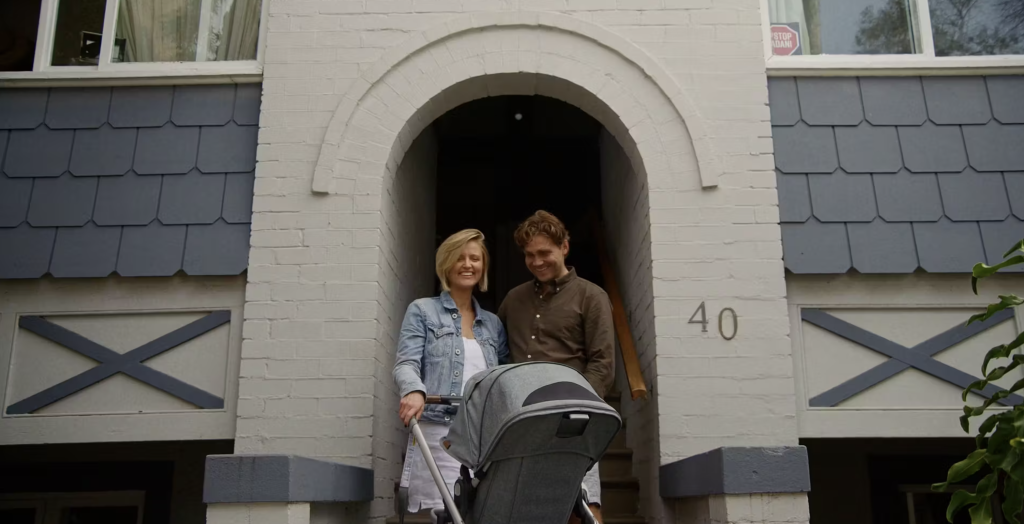
Ewan and Jen talk about their transformation from money blowers to money growers.

You did it! Congrats! Now, just a heads-up: the weeks between finding The One and actually moving in can be a blur. In the flurry of getting your finances in order as you head towards settlement, the practical steps of moving house might take a bit of a back seat. There’s a bit to do: repairs, changing addresses, dealing with your furniture (nothing worse than a couch that won’t fit) and then some. To help you leave nothing behind (including the keys to your new front door), we’ve put together a short guide on what to do in the weeks leading up to moving into your first home.
Now is a good time to start laying the groundwork for the big day. A good place to start is by sorting through your belongings – you’re bound to find a few things that no longer ‘spark joy’. Host a garage sale, or donate or throw away any items that you don’t want to bring to your new home. Organising your belongings now will make it easier to pack up later. Next, book your removal company and start gathering packing materials like boxes, tape and labels. Make sure you redirect your mail, too. Now is also a good time to get on top of any repairs or maintenance. You don’t want to be stuck doing a rush-job in the final moments of moving out.
With two weeks to go it’s time to get down to the finer details. Settling in will be a lot easier if your utilities are already set up, so start scheduling the disconnection of the old and connection of the new. Make sure it’s all covered: gas, electricity, water, phone and internet.
Next, spend an afternoon updating your contact details with your employer, the tax department, electoral commission and any service providers. Don’t forget your driver’s licence, and your bank, GP, dentist, lawyer, accountant and insurance companies. Be sure to discontinue or redirect any delivery services, automated payment plans or local memberships, like your gym if you’ve moved out of range and won’t be using them anymore. If you have pets, update or change their registration with your council.
Now is a good time to book professional cleaners so you can leave your old home in tip-top shape. And don’t leave packing too late. It’s time to start now. Go for your non-essential items first, those things you rarely use – you probably don’t want to unpack your kettle every day for the next two weeks. Also, store any valuable items, like jewellery and legal documents, together in a safe place so you can keep track of them. Don’t forget, this is a fresh start so only take with you what you love. If you won’t miss it, recycle or donate it.
You’re in the home stretch. It’s time to get your ducks in a row. Start by writing an action plan for moving day. If you decided to head down the route of using a removalist, call ahead and confirm all the details. If you can, arrange time off work so you can oversee the move.
Keep chipping away at your packing: it might be worth disassembling all your non-essential furniture, like desks and bookshelves (and tidy as you go, as it will help you feel less chaotic). Also, have a look at the floorplan of your new house and plan where your existing furniture will go. This can help you avoid lugging a couch that won’t fit and shuffling furniture around and around once you’ve moved in.
How exciting! Start by checking (and checking again). Are all your belongings packed? Have you recycled what you no longer need or love? Is your furniture disassembled? Boy, it better be. Are your boxes stacked and ready to go? Make sure you’re on the same page with your movers – what time are they coming, again? Then, do one last sweep – it might be hard to not get teary here. Finally, lock the windows and doors and turn off all the lights. And then… close the door. Breathe out. You’re ready for a new chapter.
At your new house, check all the utilities are working. You’ll know pretty quickly if the electricity hasn’t been connected. Then start settling in by unpacking some essentials and favourite things.
Over the next few weeks, as you unpack more and get familiar with how you live in your new home, make an inventory of what else you need to get. Do you need a new couch to suit your new living space? Thinking that room would look great with a rug? The choice is all yours! Phew, you did it. Enjoy this time. Oh and, finally, say hello to your new neighbours.
Important information
Any advice in this article does not take into account your objectives, financial situation or needs, and you should consider whether it is appropriate for you. Before making a decision in relation to our home loan products, you should read the Terms and Conditions booklet and Fees and Limits schedule, available at ing.com.au or by calling 133 464. All applications for credit are subject to ING’s credit approval criteria. Fees and charges apply. ING is a business name of ING Bank (Australia) Limited ABN 24 000 893 292, AFSL and Australian Credit Licence 229823.

If you’re set on securing a property in a new development, buying off the ...
It’s the question hanging over the heads of most first home buyers. And the ...

Before you sign on the dotted line, know exactly what you need to cross ...

Looking for your first home and weighing up all your options? Maybe you’ve got ...
4 min read
Hey, what do you want? Like, really, really want? If you’re similar to a lot of ...
6 min read
So you’ve found your dream first home. Huge! Let’s get it. Not so fast, ...
7 min read