
You’ve made the winning bid or offer! What happens now?
You did it! Whether you bid the winning bid on auction day or you’ve ...
8 min read
If you’ve set your sights on buying a property, chances are you’re saving hard for that deposit – and perhaps spending more than a little time looking at listings online! But there’s another important thing to get your head around at this stage: your borrowing power. After all, the amount you’re able to borrow will have a big impact on the place you’ll be able to buy.
There are online calculators that can help you get a rough idea of how much you’ll be able to borrow – but if you’re keen to find out a bit more about how banks make these decisions, here’s some things you should know.
To put it simply, your borrowing power is determined by three key factors.
By making sure you’ve considered these three things, you can put yourself in a good position to not only get a loan, but to comfortably pay it off (which, let’s face it, is an important part).
As you may already know, the amount you earn will have an impact on the amount you can borrow. On top of that, the type of income you make may also come into play – for example, some lenders will factor in any overtime you get paid, while others won’t. For less regular types of income (things like bonuses or commissions) you may need to provide evidence of how much you’ve earned over the past two to three years. It’s a good idea to start putting together this record now, so you have the info ready by the time you apply.
Another good-to-know is that, if you plan to buy an investment property, your bank may include a proportion of your potential rent when assessing your income. It’s worth seeking some independent advice if you plan to go down this route.
Getting a loan is not just about the money you make – it’s also about the money you spend. When you apply, you’ll be asked about your financial commitments, which includes everything from your regular living expenses, to regular payments you make like car loan repayments. The point of this exercise is to make sure you can live comfortably while paying off the amount you’ve borrowed. After all, who wants to be forced to live on baked beans just to own a property – or even worse, to miscalculate what you can afford, and end up struggling to pay back your loan.
When estimating your living expenses in your loan application, be realistic. Also remember that your credit cards will be taken into account – and your bank will look at the credit limit you’re approved for, rather than what you actually owe. For this reason it can be worth reducing your limit if you don’t really need it.
The last thing a lender needs to be certain about is that you’ll be able to continue paying off your loan, even if interest rates go up. It will help if you can show you live within your means, and have demonstrated the ability to save regularly. If you have extra savings to fall back on, even better – and while you’re probably putting everything into your deposit right now, it’s a good idea to start building up a savings buffer on top of this. As well as giving the bank peace of mind, it’ll probably make you feel more confident too!

Heading to an auction this weekend? To get fully prepared call one of our Home Loan specialists
Call us on 1800 267 809
In relation to our credit products, you should consider our Terms and Conditions booklet, Fees and Limits Schedule, Credit Guide and Key Facts Sheet available at ing.com.au when deciding whether to acquire, or to continue to hold, a credit product.
Any advice on this website does not take into account your objectives, financial situation or needs and you should consider whether it is appropriate for you. Before making any decision in relation to any of our products you should read the relevant Terms and Conditions booklet and Fees and Limits Schedule available under our Documents & Forms page. To view these documents you may need Adobe Acrobat. Eligibility and credit criteria apply. Products are issued by ING, a business name of ING Bank (Australia) Limited ABN 24 000 893 292, AFSL and Australian Credit Licence 229823.
You did it! Whether you bid the winning bid on auction day or you’ve ...
8 min read
So you’ve done your research and a fixer-upper feels like the right first home ...
5 min read
All set to settle? Let’s find out what they mean when they say ‘settlement’.

If you’ve got a handle on your borrowing power and have taken steps to calculate it, your ...
10 min read
This is how you can save for your first home Hands down, saving a ...

Buying your first home is a big step and a whole lot more complicated ...
9 min read
If you’re set on securing a property in a new development, buying off the plan could be a tempting option.
Like any decision, it’s important to weigh up the benefits as well as the downsides to purchasing a property which is yet to be built or only partly constructed. Whether you’re a home buyer or an investor, here are a few things to consider before you go ahead:
Think through an off the plan purchase carefully, and consider talking to your mortgage broker, lender and legal advisor to be sure it is the right choice for you.
Our home loan specialists can talk you through our options – with no obligations, just friendly support. Talk to us on 1800 267 809, 8am – 6pm Mon to Fri and 9am – 5pm on Sat.
The information is current as at publication. Any advice on this website does not take into account your objectives, financial situation or needs and you should consider whether it is appropriate for you. Deposit products, savings products, credit card and home loan products are issued by ING, a business name of ING Bank (Australia) Limited ABN 24 000 893 292, AFSL and Australian Credit Licence 229823. Living Super, a sub-plan of OneSuper ABN 43 905 581 638 is issued by Diversa Trustees Limited ABN 49 006 421 638, AFSL 235153 RSE L0000635. The insurance cover offered by Living Super is provided by Metlife Insurance Limited ABN 75 004 274 882, AFSL 238096. ING Insurance is issued by Auto & General Insurance Company Limited (AGIC) ABN 42 111 586 353 AFSL Licence No 285571 as insurer. It is distributed by Auto & General Services Pty Ltd (AGS) ABN 61 003 617 909 AFSL 241411 and by ING as an Authorised Representative AR 1247634 of AGS. All applications for credit are subject to ING’s credit approval criteria, and fees and charges apply. You should consider the relevant Product Disclosure Statement, Terms and Conditions, Fees and Limits Schedule, Financial Services Guide, Key Facts Sheet and Credit Guide available at ing.com.au when deciding whether to acquire, or to continue to hold, a product.

Jen and Ewan share the philosophy that helped them pace themselves and minimise emotion ...

Looking for your first home and weighing up all your options? Maybe you’ve got ...
4 min read
So, you’re putting in the hard yards to save for your first house. Once ...
6 min read
Solo buyer Xander explains how a less than 20% deposit is doable and gives ...

Hey, what do you want? Like, really, really want? If you’re similar to a lot of ...
6 min read
Sang, the sage family home buyer, says know your grants, think first home before ...
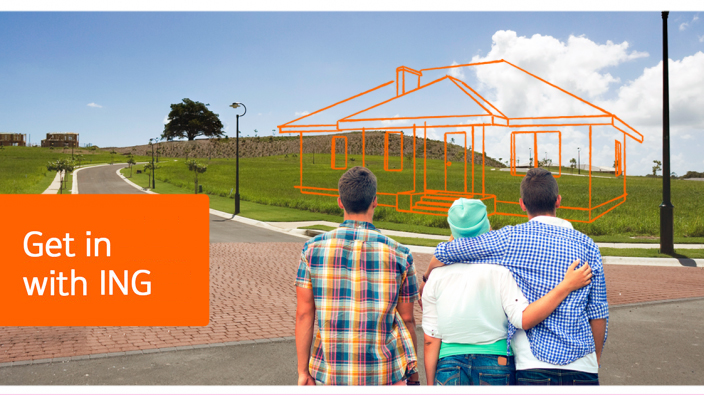
If you’re looking to buy, you better be ready because the property market is a big bad world and there’s a lot to understand. Buying a property is a tiresome and occasionally confusing job…BUT it doesn’t need to be.
Don’t spend days chained to your desk doing homework when you really want to be out exploring properties, or more importantly, enjoying your weekend! Follow these hacks to nail the groundwork in a day.
Unless you’ve found a pot of gold under your bed this morning, you’ll need a home loan. And this will depend on a variety of things including your income, your repayments and desired interest rate.
Check out the Borrowing Power Calculator. This bad-boy leaves nothing to the imagination and lets you work out how much you can borrow based off a range of factors including interest rate, loan period, number of dependants, income of participants and other expenses like loan repayments and credit card limits.
Be aspirational, but do yourself a favour and save some money for any unexpected costs, including a celebratory dinner at your new local, of course.
You’ve crunched the numbers and if you can’t afford a property on your own then why not put your friends to the test and explore joint home loan options? More Australians are cluing onto this handy hint and pooling their savings to go in with friends in order to secure their first house.
Who you join forces with is up to you. But choose wisely, as property is a long term investment and picking pals is no easy feat. We’ve listed three golden rules below to help you choose wisely.
Golden rules for choosing friends to invest in property with:
If going in with a mate just doesn’t work for you – don’t sweat it – there are other options available. You could think about looking into mortgage insurance or maybe even family guarantees.
You wouldn’t give a bad date a second chance, so why settle for less than the best with real estate agents. Before you can truly commit to an agent, you need to play the field to see what options are out there.
Our advice is to talk to as many people as possible. Whether it’s your friends, family or professionals, good advice can come from anywhere, it’s important to balance out as many opinions as you can. Grab coffee with a handful of local real estate agents to get the low down on the area and make a connection.
Find and invest time in the agents you gel with, who have your interests at heart and are not just in it for their sale. To get the convo rolling, we’ve listed some quirky little questions that will put potential agents to the test.
Real estate agent quiz:
We mean everything. Create a checklist that goes through the things you’re assessing a house against. Are you after size or location? Perhaps you’re looking to snag a bargain and price is your key factor.
Decide what your priorities are and make a check list that outlines the ‘must haves’ and the ‘nice to haves’. Wunderlist is a nifty digital tool that allows you to plan and manage checklists from your smartphone. It might seem like a simple concept, but make checklists and you’ll feel confident and at ease knowing there’s going to be no surprises.
We all know that this is kind of a big decision, being one of the most important lists you’ll make and all, but best not to stress.
Our home loan specialists can talk you through our options – with no obligations, just friendly support. Talk to us on 1800 267 809, 8am – 6pm Mon to Fri and 9am – 5pm on Sat.
The information is current as at publication. Any advice on this website does not take into account your objectives, financial situation or needs and you should consider whether it is appropriate for you. Deposit products, savings products, credit card and home loan products are issued by ING, a business name of ING Bank (Australia) Limited ABN 24 000 893 292, AFSL and Australian Credit Licence 229823. Living Super, a sub-plan of OneSuper ABN 43 905 581 638 is issued by Diversa Trustees Limited ABN 49 006 421 638, AFSL 235153 RSE L0000635. The insurance cover offered by Living Super is provided by Metlife Insurance Limited ABN 75 004 274 882, AFSL 238096. ING Insurance is issued by Auto & General Insurance Company Limited (AGIC) ABN 42 111 586 353 AFSL Licence No 285571 as insurer. It is distributed by Auto & General Services Pty Ltd (AGS) ABN 61 003 617 909 AFSL 241411 and by ING as an Authorised Representative AR 1247634 of AGS. All applications for credit are subject to ING’s credit approval criteria, and fees and charges apply. You should consider the relevant Product Disclosure Statement, Terms and Conditions, Fees and Limits Schedule, Financial Services Guide, Key Facts Sheet and Credit Guide available at ing.com.au when deciding whether to acquire, or to continue to hold, a product.

Getting seriously coupled up is a big life moment. Getting seriously coupled up and ...
5 min read
Kelly proves that agents are human and that asking them the right questions can ...

It’s the question hanging over the heads of most first home buyers. And the ...


Schools to shops, bars to bus routes, there’s lots to consider when choosing your ...
If you’ve got a handle on your borrowing power and have taken steps to calculate it, your ...
10 min read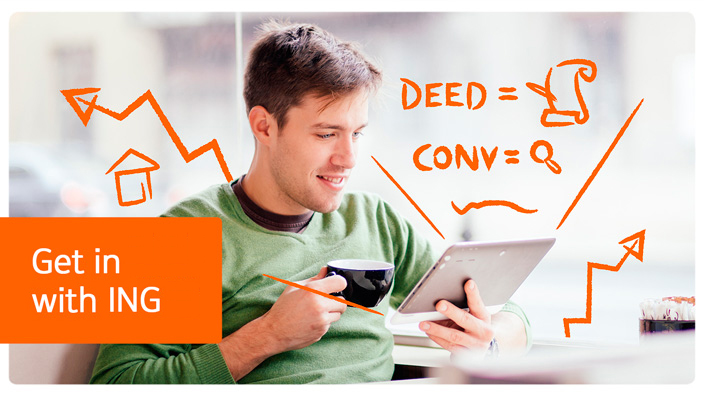
If you’ve been to a couple of inspections, you probably have your sights set on the property of your dreams. But like most of us, you’re going to need a loan to lock it down.
The real estate industry can sometimes feel like another world altogether, and you may want to brush up on your home loan speak before dealing with real estate agents and lenders. It’s easy to get caught behind a smokescreen of property and home loan jargon, so we’ve translated some of it to help you tackle the process with confidence.
Loan term: How long you’ve agreed to make the repayments on your house.
Principal: The original amount you borrowed – without the add-ons.
Interest: It’s the percentage added to the original loan that allows you to pay it off over a longer time.
Pre-qualified: You’ve sat down with a lender and been told the dollar amount you have to play with.
Pre-approved: A bank has given you the thumbs up on the home loan and you’re ready to put your money where your mouth is come auction day.
Guarantor: This is the definition of “having your back”. A guarantor is a mate or backer that will sign to be responsible for following through on your loan if for any reason you default or are unable to pay.
Home equity: This is the amount of a home that’s actually yours. Basically, it’s the value of the house minus the amount still to pay on the loan; and it’s all yours.
Assignment: This isn’t homework. It’s when an existing mortgage is passed on to someone else.
Conveyancing: Lawyer stuff, as they work on your contract when you buy a home.
Deed: A piece of paper you’ll have to sign to ‘officially’ become a home owner.
Auctioneer: That fast-talking guy who may or may not be carrying a gavel, running the auction.
Vendor: The person who currently has the keys to what might be your new place.
Cosy: Perfect first home material. Before the family comes along, grab yourself a cosy starter house and grow from there.
Potential: This home has a tonne of character, and all it needs is a bit of TLC to turn it into property gold. Invest the time and reap the rewards.
Charming: You can’t quite put your finger on it, but you feel an emotional connection to this house and it will sneak into your top choices bracket with ease.
Low maintenance: You can spend less time coming up with excuses as to why the lawn isn’t mowed – you probably won’t have one.
Art Deco or Retro: Shabby chic is all the rage right now and you’ll feel as creative as they come living in this old school gem.
Starter home: Elbow grease and favours from friends is what you’ll need here. A starter is your dream home, and you snagged it for a bargain.
Luxurious: If you’ve worked hard saving, and it’s within your price range, then go for it. You’ve earned it.
‘Principal and interest’ (P&I) loan: Principal, interest and fees. Your lender has accounted for everything and all you have to do is sit back and make the payments.
Flexible or basic loan: Dramatically cut your interest costs over time by getting on the front foot and paying it off early, or when you feel like it.
Fixed or variable loan: Playing it safe. This one fits like a glove for people who want to keep their interest costs to the very minimum and like the security of knowing their repayment amount.
‘Interest only’ (IO) loan: You’re just paying for the add-ons here. It can be renegotiated every decade or so.
—
Learning a second language is hard work! If you want to put your new found knowledge to use, call one of our Home Loan specialists on 1800 267 809.
Heading to an auction this weekend? To get fully prepared call one of our Home Loan specialists.
Call us on 1800 267 809
The information is current as at publication. Any advice on this website does not take into account your objectives, financial situation or needs and you should consider whether it is appropriate for you. Deposit products, savings products, credit card and home loan products are issued by ING, a business name of ING Bank (Australia) Limited ABN 24 000 893 292, AFSL and Australian Credit Licence 229823. Living Super, a sub-plan of OneSuper ABN 43 905 581 638 is issued by Diversa Trustees Limited ABN 49 006 421 638, AFSL 235153 RSE L0000635. The insurance cover offered by Living Super is provided by Metlife Insurance Limited ABN 75 004 274 882, AFSL 238096. ING Insurance is issued by Auto & General Insurance Company Limited (AGIC) ABN 42 111 586 353 AFSL Licence No 285571 as insurer. It is distributed by Auto & General Services Pty Ltd (AGS) ABN 61 003 617 909 AFSL 241411 and by ING as an Authorised Representative AR 1247634 of AGS. All applications for credit are subject to ING’s credit approval criteria, and fees and charges apply. You should consider the relevant Product Disclosure Statement, Terms and Conditions, Fees and Limits Schedule, Financial Services Guide, Key Facts Sheet and Credit Guide available at ing.com.au when deciding whether to acquire, or to continue to hold, a product.

Auction time is a whirlwind, but preparation pays. Here are four steps you can ...
Buying your first home is a big step and a whole lot more complicated ...
9 min read
They’re the optional extra, but the benefits could be big. Introducing… the buyer’s agent. ...
5 min read
It’s the question hanging over the heads of most first home buyers. And the ...
So, you’re putting in the hard yards to save for your first house. Once ...
6 min read
Schools to shops, bars to bus routes, there’s lots to consider when choosing your ...

Trying to get a foothold on the property ladder? Here are a few tips to help bring your home ownership goal closer to reality.
Talking to a lender at an early stage, even if you’re not ready to buy, will give you an idea of your borrowing capacity – in other words, how much you can afford to borrow for your particular circumstances. This is important as it helps you narrow down the suburbs you can afford to buy in.
The more you can save as a deposit, the less you need to borrow and the lower your regular repayments may be. So it’s worth building up your deposit, even if it means giving up some luxuries for a while.
Instead of trying to save what’s left over after you’ve paid bills and expenses, aim to save a fixed sum each pay day. Think about setting up a regular transfer from your everyday account to a high interest savings account. You’ll be growing savings and developing the habit of living within a set spending limit – something that can be useful practice for learning to live with a home loan.
Use the time it takes to grow a deposit to improve your overall financial health. Lenders don’t just look at your income when deciding loan eligibility, your disposable income will also be taken into account and this can be impacted by repayments on other debts. Where possible pay down personal loans and credit cards, and ensure you pay bills on time to avoid any black marks on your credit record.
If you can’t currently afford to buy a place on your own in your preferred area, it could be worth looking at other options. For example, you may consider pooling your cash with a close friend or sibling to purchase property as co-buyers, making your first property a rental investment in an up and coming area, rather than an owner occupied home, or buying off the plan to take advantage of possible stamp duty savings.
If you’re not sure, consider asking a financial adviser for tailored advice for your circumstances.
We want to help you reach your first home saving goals sooner.
Call us on 1800 267 809, 8am-6pm Mon to Fri and 9am-5pm on Sat.
The information is current as at publication. Any advice on this website does not take into account your objectives, financial situation or needs and you should consider whether it is appropriate for you. Deposit products, savings products, credit card and home loan products are issued by ING, a business name of ING Bank (Australia) Limited ABN 24 000 893 292, AFSL and Australian Credit Licence 229823. Living Super, a sub-plan of OneSuper ABN 43 905 581 638 is issued by Diversa Trustees Limited ABN 49 006 421 638, AFSL 235153 RSE L0000635. The insurance cover offered by Living Super is provided by Metlife Insurance Limited ABN 75 004 274 882, AFSL 238096. ING Insurance is issued by Auto & General Insurance Company Limited (AGIC) ABN 42 111 586 353 AFSL Licence No 285571 as insurer. It is distributed by Auto & General Services Pty Ltd (AGS) ABN 61 003 617 909 AFSL 241411 and by ING as an Authorised Representative AR 1247634 of AGS. All applications for credit are subject to ING’s credit approval criteria, and fees and charges apply. You should consider the relevant Product Disclosure Statement, Terms and Conditions, Fees and Limits Schedule, Financial Services Guide, Key Facts Sheet and Credit Guide available at ing.com.au when deciding whether to acquire, or to continue to hold, a product.

Home truth: life as you know it doesn’t need to stop when you start ...
6 min read
If you’re set on securing a property in a new development, buying off the ...

Just as you’d swipe and scroll the web for the perfect new pair of ...
9 min read
From the moment you start choosing between lenders to the day you move in, ...
10 min read
So you’ve done your research and a fixer-upper feels like the right first home ...
5 min read
If you find the perfect place but your savings aren’t quite 20% of the ...
Hands down, saving a deposit would have to be the hardest part about buying your first home. Balancing rent, bills and your lifestyle, as well as saving that whopping big house deposit can seem impossible. But guess what? It’s not and we believe you can get there with the right planning and support.
To help you grow your pot of gold that little bit quicker, here are some smart savings strategies to keep in mind.
Before you even think about saving, you need to know how much to save.
First up, check out the property prices in the area you want to buy in. Look at properties that match your criteria – for example, a three-bedroom fixer-upper or a move-right-in apartment – and see what these homes are selling for.
While you’re at it, use our borrowing power calculator to see if these property prices align with what you might be able to afford to borrow. If they don’t, you might need to look a little further afield.
Next, estimate your deposit. If you don’t want to pay lenders mortgage insurance (LMI) or ask for family support, then you’ll need at least 20% of the bank-assessed property value, plus an amount to cover upfront costs such as stamp duty and conveyancing fees.
But if 20% feels out of reach – and you’re keen to get on the property ladder sooner – you could shoot for a lower figure and pay the cost of LMI or seek a family guarantee. Keep in mind that when borrowing with a deposit of less than 20% interest rates might be a bit higher. There’s this, too:
Saving a sum of money like a house deposit takes planning, patience and perseverance. Follow these steps to accelerate your savings and get you from where you are today to your goal sooner.
Want a little more savings inspo?
For questions or if there’s anything we can do to help, call our Home Loan specialists on 1800 267 809, 8am – 6pm Mon to Fri and 9am – 5pm on Sat.

Starting your first home story
Begin your new chapter with ING.
Download your free guide to the ins and outs.
Our home loan specialists can talk you through our options – with no obligations, just friendly support. Talk to us on 1800 267 809, 8am – 6pm Mon to Fri and 9am – 5pm on Sat.
Loan Repayments Calculator
The Loan Repayments Calculator is not an offer of credit and is an approximate guide only. It gives an indication of the type of repayment required and the total interest payable, at the frequency requested, in respect of the loan parameters entered, namely amount, term and interest rate.
The formulae used may change at any time without notice. The calculators are provided by InfoChoice.
Borrowing Power Calculator – ING
The ING Borrowing Power Calculator is not an offer of credit and is an indication only based on the stated assumptions and the information entered by the customer.
The information is current as at publication. Any advice on this website does not take into account your objectives, financial situation or needs and you should consider whether it is appropriate for you. Deposit products, savings products, credit card and home loan products are issued by ING, a business name of ING Bank (Australia) Limited ABN 24 000 893 292, AFSL and Australian Credit Licence 229823. All applications for credit are subject to ING’s credit approval criteria, and fees and charges apply. You should consider the relevant Product Disclosure Statement, Terms and Conditions, Fees and Limits Schedule, Financial Services Guide, Key Facts Sheet and Credit Guide available at ing.com.au when deciding whether to acquire, or to continue to hold, a product.

So you’ve found your dream first home. Huge! Let’s get it. Not so fast, ...
7 min read
Decided it’s time to find a bigger place, a more convenient location or a ...
Home truth: life as you know it doesn’t need to stop when you start ...
6 min read
Trying to get a foothold on the property ladder? Here are a few tips ...
All set to settle? Let’s find out what they mean when they say ‘settlement’.
Just as you’d swipe and scroll the web for the perfect new pair of ...
9 min read
If you find the perfect place but your savings aren’t quite 20% of the property purchase price, lenders’ mortgage insurance (LMI) could help get you over the line when getting a home loan. So let’s take a look at what it means and when you might use it.
LMI is an insurance that protects the lender in case you default on your home loan, and the property sale isn’t high enough to cover what you owe. You pay the cost of the insurance, either upfront or finance it under your loan.
With LMI, lenders may let you borrow with a smaller deposit (as low as 5% for many lenders). So if you’re feeling as though that 20% deposit is simply taking too long to save, LMI could be your ticket into home ownership.
A few things affect how much LMI you might have to pay. The two main factors are:
Also worth noting is that:
Given that everyone’s situation is different and there are so many variables at play, we can’t say exactly how much LMI might cost for you. Your best bet is to ask for an LMI estimate when you speak to your lender.
On the matter of paying, most lenders let you add the cost of LMI to your home loan – you don’t need to pay for it upfront. Just be aware that, if it’s tacked on to your home loan, then you’ll pay interest on the LMI for the term of your loan, and you’ll be able to contribute less of your loan amount to the actual purchase price of the house.
Think of LMI as a potential pathway into home ownership a little earlier. Yes, it’s an added cost on your home loan, but it could mean that you jump onto the ladder before property prices surge skywards again.
For many first home buyers, it’s a matter of weighing up whether the cost of LMI will be less than the cost and effort of saving up that 20% deposit. And given the unpredictable nature of the property market, there’s no black-and-white answer. Sometimes, paying LMI and buying a property sooner will pay off in the long run – sometimes, it may not.
You’ll need to consider your personal pros and cons for LMI before you decide whether you want to bite the bullet and pay for it, or keep on saving.

To get an estimate of how much LMI will cost you, you can speak to an ING home loan specialist on 1800 267 809
Starting your first home story
Begin your new chapter with ING.
Download your free guide to the ins and outs.
In relation to our credit products, you should consider our Terms and Conditions booklet, Fees and Limits Schedule, Credit Guide and Key Facts Sheet available at ing.com.au when deciding whether to acquire, or to continue to hold, a credit product.
Any advice on this website does not take into account your objectives, financial situation or needs and you should consider whether it is appropriate for you. Before making any decision in relation to any of our products you should read the relevant Terms and Conditions booklet and Fees and Limits Schedule available under our Documents & Forms page. To view these documents you may need Adobe Acrobat. Eligibility and credit criteria apply. Products are issued by ING, a business name of ING Bank (Australia) Limited ABN 24 000 893 292, AFSL and Australian Credit Licence 229823.

Sang explains family home buying as a fine balance between what’s right for the ...
If you’ve been to a couple of inspections, you probably have your sights set ...
If you’re looking to buy, you better be ready because the property market is ...

There’s nothing worse than falling in love with a property only to be told ...
Decided it’s time to find a bigger place, a more convenient location or a ...
Trying to get a foothold on the property ladder? Here are a few tips ...
There’s nothing worse than falling in love with a property only to be told by lenders that it’s about $250,000 beyond your budget. You. Still. Want. That. House. Getting an idea of how much you can afford to borrow up-front helps you avoid emotional house-hunting hiccups like these.
In the early stages of looking into home loans, you can easily get an estimate of your borrowing power from lenders (most have online tools). As you get to the pointy end of house-hunting, you can firm up that estimate with pre-approval.
So let’s take a look at all of this – plus other things to consider about how much you can afford to borrow – in more detail.
In working out your borrowing power, lenders look at a little more than just your money coming in and going out. Things like the limit on your credit card, personal loans and whether you have kids will play a part.
You can enter all of this info into a borrowing power calculator, which crunches the numbers to give you an indication of how much you could borrow based on the information you provide about your current circumstances.
Say the number that the calculator spits out is $500,000. If you’re hoping to save a 20% deposit then you could do the following sum to get an idea of how much you could spend on a property:

It is also important to consider the costs that you’ll need to pay additional to the deposit, such as stamp duty, legal and conveyancing fees, removalists and building inspections etc.
With an estimate of how much you could afford to borrow in mind, you could then play with your budget to see how home loan repayments fit into the picture (if you haven’t done a budget, consider using a tool like our budget planner).
Currently paying rent? If you’re planning to live in your new home, then this cost will disappear from your budget and be replaced with your home loan repayments. To see how much your loan repayments might be (compared to your current rent), you could play around with our home loan repayments calculator.
Don’t forget, some of the money you’re currently squirrelling away for your deposit could go towards home loan repayments when you buy the house, too.
Things can change … both within your own life and the world around you.
For example, variable home loan rates can fluctuate. Even though this is all a bit beyond your control, you can put yourself in the driver’s seat by making sure that you could handle interest rate increases on your home loan.
Then there are the things that change in your own life. Planning a family soon? Kids can cost money. Or have you been thinking about returning to study, and working less while you learn? What about a new business venture? Such pursuits can significantly affect your income and expenses – and hence your ability to comfortably pay back a home loan.
Given all these variables, you should think long-term when you’re working out how much you can borrow.
Once you have a rough idea of how much you can borrow, it’s time to validate your theories by talking to some lenders. Only by running through your personal situation in a little more detail will you get an accurate picture of the price tags you can afford.
ING home loan specialists are here to help. If you’ve got a deposit ready, we can sort out pre-approval for you – so you can house-hunt with more confidence that you’ll get the loan you’re after. Or, if you’re still in the early stages of saving up a deposit, we can assess your financial situation and give you a clearer indication of how much you might be able to borrow.
For questions or if there’s anything we can do to help, call our home loan specialists on 1800 267 809, 8am-6pm Mon to Fri and 9am – 5pm on Sat.
Starting your first home story
Begin your new chapter with ING.
Download your free guide to the ins and outs.
Loan Repayments Calculator
The Loan Repayments Calculator is not an offer of credit and is an approximate guide only. It gives an indication of the type of repayment required and the total interest payable, at the frequency requested, in respect of the loan parameters entered, namely amount, term and interest rate.
The formulae used may change at any time without notice. The calculators are provided by InfoChoice.
Borrowing Power Calculator – ING
The ING Borrowing Power Calculator is not an offer of credit and is an indication only based on the stated assumptions and the information entered by the customer.
The information is current as at publication. Any advice on this website does not take into account your objectives, financial situation or needs and you should consider whether it is appropriate for you. Deposit products, savings products, credit card and home loan products are issued by ING, a business name of ING Bank (Australia) Limited ABN 24 000 893 292, AFSL and Australian Credit Licence 229823. All applications for credit are subject to ING’s credit approval criteria, and fees and charges apply. You should consider the relevant Product Disclosure Statement, Terms and Conditions, Fees and Limits Schedule, Financial Services Guide, Key Facts Sheet and Credit Guide available at ing.com.au when deciding whether to acquire, or to continue to hold, a product.
All set to settle? Let’s find out what they mean when they say ‘settlement’.

Borrowing. Power. These two words will have a massive influence on how you choose ...
8 min read
Top of the list of things you’re paying for as a first-home buyer is ...
9 min read
Solo buyer Xander explains how a less than 20% deposit is doable and gives ...

As people rush from inspection to inspection, or homeowners stress about getting ‘sale ready’, ...
As people rush from inspection to inspection, or homeowners stress about getting ‘sale ready’, the importance of having a good real estate agent on your side can’t be underestimated. Because no matter whether you’re selling your home or buying a new one, the agent will be your key contact and go-to-person. So, to help you choose the right agent to sell your home, or get the right information when buying a home, we’ve prepared a list of questions to ask real estate agents.
While many folks are wary about the trustworthiness of real estate agents, ask the right questions and they could be your best source of tips and need-to-knows. And let’s face it, when you’re making a purchase this big, it pays to have as much information as you can.
Why are the owners selling?
Asking why the owner is selling gives you an insight into their motivations and how quickly they need to sell the house, which can be an invaluable negotiating tool. If they’re moving to another state for work or have bought another house, there will be a greater urgency to sell than someone looking to upgrade to a bigger home.
Understanding the seller’s situation and offering a flexible settlement period can also help your bid get over the line. Some real estate agents may be reticent to talk about these details, which is why it pays to be friendly and conversational.
Can I have a recent property sales report?
No one will know the local market better than the real estate agent. So, ask them for a recent sales report showing what similar properties in the area have sold for in the last three months. It will help you see if a property is priced fairly, or what you can expect to pay at auction, and give you the information you need to negotiate a good price.
How long has the property been on the market?
Properties that stay on the market for an extended period can often be overpriced. However, it could also present an opportunity. If it’s on the market for 60 days or more, sellers may be prepared to adjust their expectations and accept lower offers.
Be wary though, because another reason it may not be selling is because there is a major defect. Never buy without a building and pest inspection and if the house was passed–in at auction, you may want to dig around to find out why.
What do the owners love about the property and the neighbourhood?
This is a question that can tell you more about a home than appearance alone. The agent may have to check with the owners, but that will only increase rapport. Ask about the owners’ favourite features, places to relax and nearby hotspots. It’s also important to get a feel for the people you’ll be sharing the street or unit block with. Is there a family feel with lots of kids, or is it a quieter neighbourhood? Are the neighbours friendly? These kinds of questions will help you understand the home and get a feel if this is a place you’d like to live.
What can you tell me about the suburb?
Most agents will know the area well and can give you tips about the great dog park down the road, the local schools and where the nearest shops are. They may also be able to give you more insight on the street itself and help you compare one suburb to the next.
How much do the sellers expect? Are they willing to negotiate?
Depending on the market and location, houses can often sell below the asking price. So don’t be afraid to ask the agent about previous offers, what the owners are realistically expecting to get and what the lowest price the owners would accept is. Most agents will give you at least a subtle indication of expectations.
Have the owners done any recent renovations or major building work?
To get a feel for a property’s true worth, you’ll need to know if there have been any extensive renovations. It’s also worth asking if there are any known issues with the property, land or property boundaries. A building inspector should pick these up, but most real estate agents will act in good faith if asked.
Will the vendor accept an extended cooling off period or deposit bond?
Unless you waive your right to a cooling off period (like if you buy at an auction, for example), cooling off periods vary between 2 to 5 days across Australia. To give you more time to organise a building inspection or get finances finalised, it’s worth asking the agent if the owner would be prepared to allow more time.
If you don’t have the cash ready for a 10% deposit, then you might be able to negotiate a deposit bond. However, you need to check with the agent if the vendor will accept this, as the bond basically acts as an insurance policy for the vendor and none of the deposit will actually change hands until settlement.
There are lots of agents out there, who all present well and have great stories to tell. Which can make choosing one difficult. The best way to get a feel for how they work and who will work best for you, is to ask them the hard questions. Narrow your list down to between 3 to 5 agents, then fire a few tricky ones at them.
How long have you been working in real estate for?
You don’t want some brash fly-by-nighter. An experienced agent who has completed a number of successful sales can offer an enormous amount of expertise and sales knowhow. It’s not about age either. It’s more about finding someone who knows the local area, has a sales record that shows they understand buyers, and is hungry and motivated to get you the best price possible.
What properties have you sold in the area?
Knowing an agent has a proven track record in the area and finding out the sales prices they’ve been able to achieve can make your decision easier. You want someone who not only understands the dynamics of your suburb, but who specialises in homes similar in size, price and type to yours. Ask if they will supply you with a list of previous clients as a reference. Check too if they have a database of clients that have missed out on homes previously. These could be the people waiting to step through your door.
What price do you think we can get?
Of course you’re going to ask about the price. It’s probably one of your first questions. But it’s the follow-up questions that are really important. After the agent gives you their value, ask what they’re basing that figure on. They should be able to support it with comparable homes they’ve sold, sales in the area and market trends. You want someone that’s optimistic and keen to maximise your profit. But you don’t want to pick the agent who falsely, and illegally, inflates the price to get your business.
What are your fees and what do they include?
Ask if they charge a commission, what it is and whether they’re willing to negotiate on that. Commissions vary, but on average they are about 2 – 2.5% of the sale price. Some agencies now charge a flat fee instead, but you’ll need to ask what that includes. Overall you need to be clear about the costs and fees each agent charges and do the maths. You don’t necessarily need to choose the cheapest, but you certainly don’t want to be paying many thousands more than you need.
What marketing tools will you use?
Your agent should have a sales strategy ready. And don’t be satisfied with just online and newspaper property advertising. It’s essential yes, but there’s also social media, editorial content, emails and local area flyers. A database of interested buyers is also very important. Ask too if they pay the marketing costs or if it’s your responsibility. If you’re paying the advertising, you should be able to negotiate a lower fee or commission.
Is there anything we should do to our house to make it easier to sell?
Ask the agent how you could make potential buyers fall in love with your place. If they know what buyers are looking for, they should be able to suggest a few things off the top of their heads, from cosmetic changes to little renovations, that could add to your chances of selling for the best price possible.
How should we sell our home?
There are many different ways to sell your home, from auction and private treaty, to expressions of interest or written bids. Ask your potential agents which would be right for you and why. The answers will give you an insight into their knowhow and sales strategy.
Chat with our home loan specialists
Thinking of buying a home? Our home loan specialists are here to help. We can talk you through the process, calculate how much you could borrow and what your repayments would be and, should you be ready, help organise home loan pre-approval.
To talk to a home loan specialist, simply call 1800 267 809, 8am – 6pm (AEST/AEDT), Monday to Friday or 9am – 5pm AEST on Saturday.
In relation to our credit products, you should consider our Terms and Conditions booklet, Fees and Limits Schedule, Credit Guide and Key Facts Sheet available at ing.com.au when deciding whether to acquire, or to continue to hold, a credit product.
Any advice on this website does not take into account your objectives, financial situation or needs and you should consider whether it is appropriate for you. Before making any decision in relation to any of our products you should read the relevant Terms and Conditions booklet and Fees and Limits Schedule available under our Documents & Forms page. To view these documents you may need Adobe Acrobat. Eligibility and credit criteria apply. Products are issued by ING, a business name of ING Bank (Australia) Limited ABN 24 000 893 292, AFSL and Australian Credit Licence 229823.
Home truth: life as you know it doesn’t need to stop when you start ...
6 min read
Schools to shops, bars to bus routes, there’s lots to consider when choosing your ...
If you’re set on securing a property in a new development, buying off the ...
There’s nothing worse than falling in love with a property only to be told ...
It’s the question hanging over the heads of most first home buyers. And the answer can vary significantly – depending on how quickly you want to get onto the property ladder and which lender you go with.
Ultimately, you’re going to need at least a 5% deposit. So start to work out what you’re aiming to buy and how much it’ll cost, and then you can start saving with a clear goal in mind. Let’s take a look at your options when it comes to the deposit on a home loan, so you can lock in a savings goal with more confidence.
Before we dive into detail about deposits, you may want to wrap your head around some common terms used by lenders. These things can influence how much you need to save.
This is a percentage, calculated by dividing the amount you borrow against the lender-assessed value of the property. For example, if you borrow $400,000 to buy a property valued at $500,000, the LVR of your loan is 80%.
This is an insurance that you usually have to pay if your LVR is higher than 80%. It’s insurance cover for the lender to protect them in case you default on your home loan and the property sale isn’t high enough to cover what you owe.
This is where someone in your family (a guarantor) uses the equity in their own property as security for your loan, which means they agree to be responsible for your loan if you default or are unable to pay.
The number you’ll hear most when talking deposits is 20%. There’s this unspoken rule that you should save at least 20% of the lender-assessed value of the property to get a home loan. But … this is only true if you don’t want to or can’t pay LMI or use a family guarantee.
With a bigger deposit of 20% under your belt, you don’t need to borrow as much money. Which means you’ll pay less in interest over the life of your loan. And you don’t need to worry about having LMI.
So, saving up a 20% deposit could be worth it. But if it feels way too unrealistic, you’ve got other options.
These days, most lenders accept deposits of as low as 5% (in other words, the LVR is 95%). But, as mentioned above, a low deposit comes with a big caveat. LMI.
LMI – it can be a big additional cost on top of the home-buying process. But in urban areas, such as Sydney, where property prices are quite high, then people can see LMI as an opportunity to get on board the property ladder much faster. Instead of spending years living frugally and saving every penny towards a massive deposit, they save a smaller deposit and use LMI to buy – so they don’t miss out on the opportunity to buy.
Your other option is to enlist the help of a family member. With their support, you could only need a 5% deposit. Just remember, it’s a big ask. So talk it through carefully, give your family member the opportunity to properly consider the implications for themselves and their property, and make sure you’re all clear on everyone’s responsibilities if you go down this path.
It is also important to understand that borrowing 95% of the property value may mean your repayments are quite high. Then you’ll need to ensure that you are able to afford these repayments ongoing.
Once you’ve decided whether to aim for the 20% mark or not, you can start crunching the numbers on just how much you’ll need to save. Working out your borrowing power helps at this point.
Let’s use a $650,000 house as an example to show how much deposit you may need (for simplicity’s sake, we’ll ignore costs like stamp duty for now but it is worth noting that those costs needs to be paid on top of the deposit):
If you want a 20% deposit, then it will look like this:
$650,000 x 20 / 100 = $130,000
If you only want to save a 5% deposit, then it could look like this:
$650,000 x 5 / 100 = $32,500 (the LMI can be or included in the loan)
That’s a pretty big difference, isn’t it? Taking the second route could get you into home ownership earlier – just factor in the extra cost of LMI (which could be substantial) and the fact that you’re going to have to borrow a lot more money ($618,500 versus $520,000), which means your repayments will be higher and you’ll pay more in interest over the term of the loan.
Whichever way you go, working out roughly what your deposit looks like is a great first step in saving.
The jury’s out on this one. While a bigger deposit definitely has its benefits, for many the ability to start house-hunting earlier is more important.
Want to know more about your deposit?
For questions or if there’s anything we can do to help, call our home loan specialists on 1800 267 809, Mon to Fri and 9am – 5pm on Sat.
Starting your first home story
Begin your new chapter with ING.
Download your free guide to the ins and outs.
Borrowing Power Calculator – ING
The ING Borrowing Power Calculator is not an offer of credit and is an indication only based on the stated assumptions and the information entered by the customer.
The information is current as at publication. Any advice on this website does not take into account your objectives, financial situation or needs and you should consider whether it is appropriate for you. Deposit products, savings products, credit card and home loan products are issued by ING, a business name of ING Bank (Australia) Limited ABN 24 000 893 292, AFSL and Australian Credit Licence 229823. All applications for credit are subject to ING’s credit approval criteria, and fees and charges apply. You should consider the relevant Product Disclosure Statement, Terms and Conditions, Fees and Limits Schedule, Financial Services Guide, Key Facts Sheet and Credit Guide available at ing.com.au when deciding whether to acquire, or to continue to hold, a product.
Trying to get a foothold on the property ladder? Here are a few tips ...
If you find the perfect place but your savings aren’t quite 20% of the ...
Hey, what do you want? Like, really, really want? If you’re similar to a lot of ...
6 min read
Jen and Ewan share the philosophy that helped them pace themselves and minimise emotion ...
If you’re looking to buy, you better be ready because the property market is ...

Before you sign on the dotted line, know exactly what you need to cross ...